
Unpacking the Micro-Government: CapEx Pools, Municipal Offsets, and the Price of Autonomy
The media loves a divisive homeowners association story—fines for the wrong shade of beige, power-tripping board members, or unexpected special assessments—because these sensationalized HOA stories generate easy clicks.
As an engineer, I have some occasional control “issues”, so I will do my best to be fair to these associations as well. These micro tyrants can take a lot of control in your neighborhood—only you know if the benefits outweigh the loss of autonomy for you.
But what actually is an HOA when you strip away the emotion and the neighborhood politics?
An HOA is simply a localized risk-pooling and asset management vehicle. It is a micro-municipality. Understanding whether an HOA is “worth it” requires ignoring the media narratives and auditing the organization’s balance sheet to see exactly what variables are most important.
Defining the Model: The Three Buckets
When you pay an HOA fee, your capital is being deployed into a closed system. To evaluate if you are getting a return on that capital, you have to break the dues down into three distinct functional buckets.
- Operational Expenses (OpEx)
This bucket covers services that happen on a recurring schedule such as:
- Landscaping and lawn care
- Snow removal
- Pool heating and chemical maintenance
- Upkeep of shared lobbies, clubhouses, and/or gyms
- Master insurance policies (for common areas or exterior structures)
- The Municipal Offset
Building on our previous newsletter about property taxes, HOAs often exist to provide services that the local city or township will not. If a community has private roads, the county snowplows will not touch them. Therefore, your dues may cover services such as:
- Private road paving and maintenance
- Private trash, recycling, and yard waste collection
- Gated security and private street lighting
- Automated gate maintenance
- Upkeep of community parks and/or trails
- Capital Expenditure Reserves (CapEx)
This is the most critical and most misunderstood bucket. Every physical asset has a depreciation schedule. The roof on a townhome degrades a little bit every single day. A properly structured HOA calculates the exact lifespan of its shared assets (roofs, private roads, clubhouses) and collects a fractional amount from you every month so that when the roof fails in year 20, the cash is sitting in a reserve account ready to purchase the new roof.

The “Low HOA” Trap: Deferred Maintenance Masquerading as Affordability
Everyone wants a low HOA fee. Buyers frequently screen properties looking for dues under x-amount per month without realizing the potential drawbacks.
Imagine a neighborhood with a community pool, private roads, and a clubhouse, charging $50 a month in dues. That is not a “good deal.” That is financial irresponsibility.
A low HOA fee in an asset-heavy community simply means the board is underfunding the CapEx Reserve bucket. They are artificially suppressing the monthly fee to appease residents today, guaranteeing a massive, localized special assessment tomorrow when the private road inevitably crumbles. From a modeling standpoint, an artificially low HOA fee is just deferred technical debt that you are acquiring.
The Flipside: Dues vs. Asset Value
While low dues can be a trap, high dues introduce a different structural problem: the inverse correlation between HOA fees and property value.
The real estate market heavily focuses on monthly payments. Because buyers purchase homes based on their monthly debt-to-income limits, the open market dictates the maximum total monthly cost a specific type of home can command.
This means that if an HOA has high dues, the property value is typically lower to compensate.
Imagine two identical condos in neighboring complexes. The market dictates that buyers are willing to pay a total of $2,500 a month (Mortgage + Taxes + HOA) for this specific floor plan.
- Condo A has responsibly funded reserves and an HOA fee of $500/month. This leaves $2,000 for the mortgage and taxes. At current interest rates, Condo A could list for roughly $275,000.
- Condo B has deferred maintenance and an artificially low HOA fee of $200/month. This leaves $2,300 for the mortgage and taxes. That extra $300 a month in borrowing power allows the buyer to finance more debt, supporting a purchase price of roughly $320,000.
Because Condo B allows a buyer to carry a larger mortgage for the exact same total monthly payment, Condo B will sell for a higher purchase price. Condo A will sell for less, because the buyer has to shrink their loan size to accommodate the $500 HOA fee.
The paradox here is critical for modeling: high HOA dues directly suppress your property’s market value. You are effectively funding the building’s infrastructure maintenance at the direct expense of your own equity growth. HOA dues therefore impose more risks than a surprise special assessment–they impose the risk of lowering your property value if dues grow over time.
The Evaluation Equation
To understand if an HOA makes financial sense for your specific situation, you have to look at your Total Cost of Maintenance (TCM).
When an HOA fee increases, your individual maintenance costs should decrease by a proportional amount. The model looks like this:
TCM = HOA Dues + Individual Maintenance
If you buy a single-family home with zero HOA, your individual maintenance risk is 100%. You are solely responsible for saving for your next roof, paying for your gym membership, and supplying lawncare.
If you buy into an HOA that costs $300 a month, but it covers a $50/mo gym membership, $100/mo in landscaping/snow removal you’d otherwise outsource, $50/mo in private trash/water utilities, and $100/mo in fractional roof replacement savings—the HOA isn’t actually “costing” you $300. It is simply shifting capital from the Individual Maintenance variable over to the HOA Dues variable.
Understanding what your HOA does for you is the first step to determining what an acceptable monthly, quarterly, or annual due might look like.


The final variable is unquantifiable: The Autonomy Cost.
When you buy into an HOA, you are trading architectural freedom for an aesthetic baseline. You cannot paint your door neon green, but neither can your neighbor. For some, this loss of autonomy is a dealbreaker. For others, knowing their neighbor can’t park a rusted RV on the front lawn for six months is a feature, not a bug.
Was I thrilled when I was given a tight deadline to wash a small black spot off my driveway when my neighbor’s yard, sidewalks, and fence were all filthy? Not particularly. Did I appreciate the warning letter when my car was parked in the street for a quick garage cleaning? Of course not. But do I see some benefit to consistent exterior maintenance expectations that protects the value of my own home? Sure.
An HOA is not inherently good or evil; it is simply a financial and operational framework. A well-funded HOA with a current reserve study and consistent application of expectations is a highly efficient way to pool risk, outsource maintenance, and protect value. A poorly funded and run HOA is a liability.
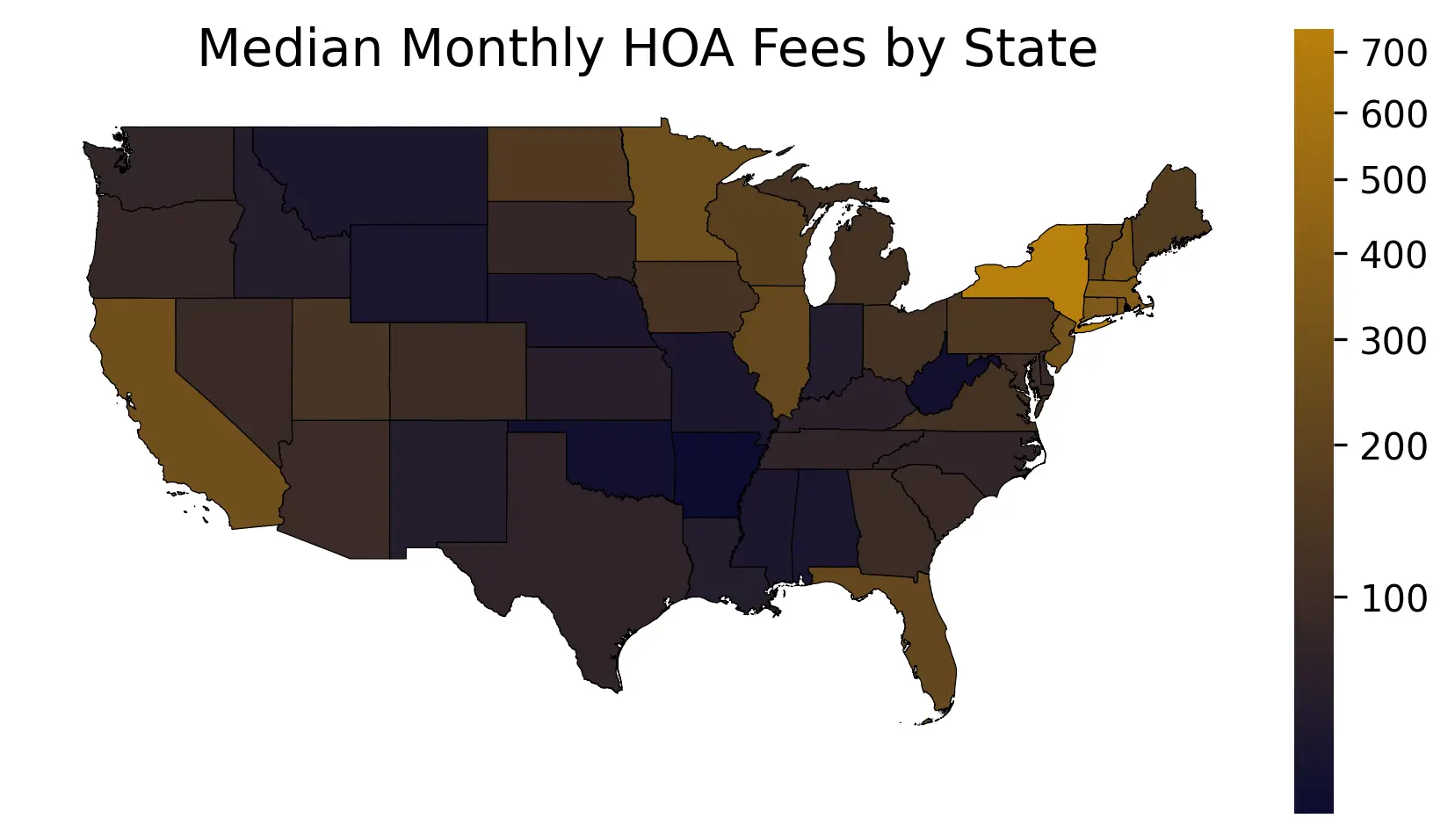
Are You Average?
The media treats all HOAs as equal variables in the affordability equation. But the spread between a fully-funded, expertly managed association and a bankrupt one is massive. Property ownership, like the systems that govern it, must be evaluated on an individual, asset-by-asset basis. If you aren’t “average,” why fixate on the average headline?
Apply this methodology to your specific situation here: https://thefppartners.com/free-analysis-toolkit
Comments